
Ruby Fibers: 8 Useful Reads On Ruby’s New Concurrency Feature
 New to Ruby 1.9 is the concept of fibers. Fibers are light-weight (green) threads with manual, cooperative scheduling, rather than the preemptive scheduling of Ruby 1.8's threads. Since Ruby 1.9's threads exist at the system level, fibers are, in a way, Ruby 1.9's answer to Ruby 1.8's green threads, but lacking the pre-emptive scheduling.


 At
At 
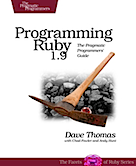 Whether you love it or not, as a Rubyist you probably have a copy of Programming Ruby (also known as The Pickaxe) floating about. It was the first English language Ruby book to be published and was instrumental in boosting Ruby's popularity in the early noughties.
 Update: I retract the post Be Professional or Be Edgy: How Context Can Keep Everyone Happy of April 27, 2009 in full. It covered an issue that started as a Ruby-related thing, but quickly became focused on the behavior and sentiments of some Rails communities. Ruby Inside is a Ruby news blog; therefore my editorial was unuseful and made for dull reading. I apologize for falling into such boring territory.
 It was way back in November 2007 that
  It's been just over a year since