How To Install A Ruby 1.8 Stack on Ubuntu 8.10 From Scratch
 Want to install Ruby, RubyGems, and a collection of common gems on Ubuntu 8.10 (Intrepid Ibex) in just a few minutes? Here's the skinny.

Want to install Ruby, RubyGems, and a collection of common gems on Ubuntu 8.10 (Intrepid Ibex) in just a few minutes? Here's the skinny.
 If you read a lot of Ruby blogs, you might see people talking about testing (or its behavior driven equivalent) as if it's the holy grail, yet most Ruby books and online tutorials fail to cover it in much detail at all. Last year, Jamie Van Dyke wrote an article for The Rubyist called Building A Gem Using BDD to put things right (the article was licensed exclusively to the magazine until recently).
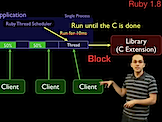 Earlier this month, Rails Envy's Gregg Pollack gave a talk at RubyConf08 called Scaling Ruby (without the Rails). He answered questions like "How do existing Ruby applications use Threads/Processes to scale?", "How do we implement an Event Driven application using Ruby EventMachine?", "What are the current bottlenecks with speeding up Ruby and how can they be fixed?", and "What does Ruby 1.9 bring to the table to speed things up?" From what I hear, it was a very well received and informative session.
 Merb - a much heralded, highly flexible Ruby-based Web application framework - has reached version 1.0 after two years of development. Congratulations to Merb's creator, Ezra Zygmuntowicz, and to the large group of associated developers (such as Yehuda Katz and Matt Aimonetti) who've kept adding features and pushed Merb forward to be a significant alternative to Rails.
 Over a year ago we had a post about how to build OS X GUI applications with Ruby and RubyCocoa. Since then, however, MacRuby has arrived on the scene. Not just the regular version of Ruby with some bindings to Cocoa, MacRuby is as native to OS X as JRuby is native to the JVM.
 Back in March 2008, Vidar Hokstad - a London based Norwegian developer - began to write a series of blog posts on writing a compiler in Ruby from the ground up. Early on, I took objection to some elements of his approach, but it still stands as a great series of posts. Vidar recently reached post 11, providing enough of a landmark to introduce the series as a whole (which is already scheduled to go up to at least 20 posts).
 What's Hot on Github is a monthly post highlighting new and/or interesting projects within the Ruby community that are hosted on Github. Github has become an extremely popular place for Ruby and Rails developers to congregate lately, so I wanted to list some of the new projects, and some of the updated ones, that I have found interesting and that are too small for their own blog post.

Github is a great resource for finding new projects within the Ruby community. It has become an extremely popular place for Ruby and Rails developers to congregate lately, so I wanted to list some of the new projects, and some of the updated ones, that I have found interesting and that are too small for their own blog post. Let us know if you like this as we might turn it into a regular series on Ruby Inside!


Slapp: A simple chat wall Merb tutorial is a perfect example of the sort of tutorial / guide that could encourage a lot of people to try out a new framework (as far as Merb is new, of course). It walks you through the process of developing a "chat wall" type application with Merb from start to finish (right from installing Merb to playing with the running application).




Chad Woolley has put together a helpful blog post called "ruby-debug in 30 seconds (we don't need no stinkin' GUI!)" that covers how to use the ruby-debug command line debugger to debug Ruby applications. Also of interest will be this cheat sheet by the guys over at ErrFree.
Amazon EC2 (Elastic Compute Cloud) Control Library
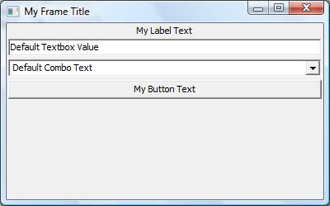
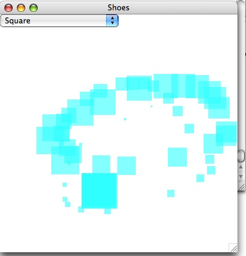
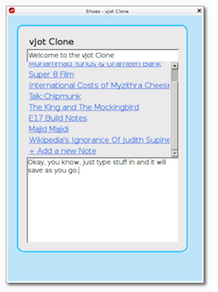
Will Larson has put together a great "from start to finish" tutorial on building a graphical application on OS X using Shoes, the cross platform GUI library by whytheluckystiff. It goes right from explaining what Shoes actually is, through to its installation, some basic examples, and then to building a basic graphics-focused application.
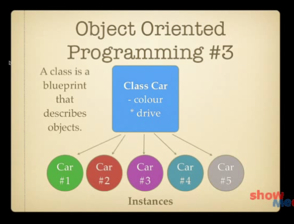
A few weeks ago, Peter Vanbroekhoven of the newly formed Belgian Ruby User Group gave a presentation called Metaprogramming in Ruby (video and slides available). Peter looks at some of the metaprogramming voodoo used by libraries like ActiveRecord and looks at how to create domain specific languages of your own.