In math, a unary operation is an operation with a single input. In Ruby, a unary operator is an operator which only takes a single 'argument' in the form of a receiver. For example, the - on -5 or ! on !true.
Ruby isn't known for its game development chops despite having a handfulofinterestinglibraries suited to it. Java, on the other hand, has a thriving and popular game development scene flooded with powerful libraries, tutorials and forums. Can we drag some of Java's thunder kicking and screaming over to the world of Ruby? Yep! - thanks to JRuby. Let's run through the steps to build a simple 'bat and ball' game now.
Recently, there have been many screencasts of people coding things in real time. Yesterday, Ryan Bigg released a video of him implementing Conway's Game of Life from scratch by reading through the 'rules' and then using RSpec to take a test driven approach to fleshing out the functionality.
In Rubyists Already Use Monadic Patterns, Dave Fayram made a passing reference to using ||= to set a variable's value if its value were 'Nothing' (false or nil in Ruby). The resulting Reddit quickly picked up on his definition (which was fixed later) and argued about ||='s true meaning which isn't as obvious as many Rubyists think. This spread to Freenode's awesome #ruby-lang IRC channel where I picked it up.
Despite RSpec's awesomeness, Test::Unit remains the most popular Ruby testing tool out there outside of Rails apps. I've recently been code walking through a lot of Ruby libraries for my Ruby Reloaded course and the typical arrangement is Test::Unit, sometimes coupled with Shoulda or Contest for some extra syntactic sweetness.
In the past couple of months I've seen situations arise where developers aren't entirely sure how Ruby has chosen to interpret their code. Luckily, Ruby 1.9 comes with a built-in library called Ripper that can help solve the problem (there's a 1.8 version too, see later). Here, I give the 30 second rundown on what to do.
Rails 3 is great. RSpec 2 is great. And Ruby 1.9.2 is really great. Getting them all running together and quickly, however, isn't entirely straightforward. In this post I demonstrate how to get everything ticking over along with automatically running, super-snappy test runs.
For better or worse, Ubuntu has become one of the most popular Linux variants on which to deploy Ruby and Rails apps. It was used for 84% of the 2010 Rails Rumble projects, for example. Back in 2009, I wrote a guide to installing a Ruby 1.8 stack on Ubuntu 8.10 so it was only a matter of time before I had to tackle 10.10 (Maverick Meerkat) and Ruby 1.9.
Ruby screencasting supremo Geoffrey Grosenbach has unveiled PeepCode's new Meet Rails 3 series. There are two parts so far, clocking in at 75 and 92 minutes respectively - they're $12 each or "free" if you have a PeepCode Unlimited subscription.
Rails for Zombies is an intriguing attempt to teach people how to use Ruby on Rails directly in the Web browser. It comes from Envy Labs (and specifically Gregg Pollack, once of RailsEnvy fame).
Treetop is one of the most underrated, yet powerful, Ruby libraries out there. If you want to write a parser, it kicks ass. The only problem is unless you're into reading up about and playing with parsers, it's not always obvious how to get going with them, or Treetop in particular. Luckily Aaron Gough, Toronto-based Ruby developer, comes to our rescue with some great blog posts.
It's been a great year for Ruby on Android, but no one knows it. You can start writing Ruby apps for Android devices TODAY. You don't need to install any SDK, you don't need to install some giant Eclipse IDE, and you certainly don't need to write any Java.
With Microsoft's IronRuby and Silverlight, Ruby can become a first-class citizen in the browser on Windows, Linux and OS X.. think <script type="text/ruby"> - yes, it's possible! This walkthrough will get you started with using Ruby in the browser for HTML and vector-graphics-based applications. IronRuby enables Web developers to use Ruby to write client-side browser applications and even reuse code between the server and the client.
EventMachine is a simple(ish), fast, event-driven I/O library for Ruby. Its goal is to provide highly scalable I/O performance with an easy-to-use API wrapped around the nastiest parts of the process (since typical Ruby coding practices aren't particularly event-driven friendly). Aman Gupta has put together an awesome 114-page deck of slides(also available as a PDF) that walks through EventMachine with lots of practical code examples.
Garbage Collection and the Ruby Heap is a presentation given by Joe Damato and Aman Gupta at the recent LA Ruby Conference. You only get the slides for now (all 70 of them!), but they're very detailed and can almost work as a standalone concise e-book on Ruby's garbage collection system.
Toto(GitHub repo) is a new lightweight Ruby and Rack-based blogging engine designed specifically for "hackers" by Alexis Sellier. Content is managed entirely through Git - so everything is version controlled - and articles are stored as text files with embedded YAML metadata. At only 300 lines, it's easy to hack to your own taste, too.
One of the biggest benefits of bringing Merb developer Yehuda Katz on board to work on Rails 3.0 has been his relentless pursuit of extracting out all of Rails' magical abilities from their monolithic encasings and into separate, manageable chunks. A case in point is ActiveModel, a new library that provides the model related parts of ActiveRecord but without the database requirements.
RubyPulse is a screencast site that publishes regular videos about different Ruby libraries. It's a month old so far and German Ruby developer Alex Peuchert has put out 9 episodes already. With a little support, perhaps Alex will be able to keep it going and become the pure Ruby equivalent of Ryan Bates!
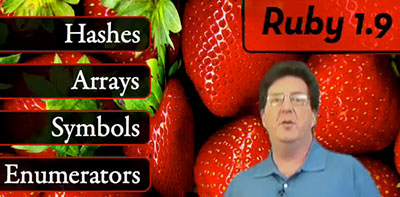
Tekniqal.com is a site offering a series of 17 Basic Ruby tutorials in screencast form. In a way, it's like Railscasts, but focusing solely on basic Ruby techniques. So far there are 17 tutorials covering basic topics from whitespace and identifiers through to symbols and hashes, but it looks like there'll be more in future.
Sau Sheong Chang works at Yahoo!'s Singapore office. Yahoo! isn't implemented in Ruby, of course, but Sau's made an attempt at implementing a basic search engine in Ruby and has written a pretty interesting, indepth article about the whole process. Sau's search engine is formed of a crawler, indexer, and query system, and uses Hpricot, DataMapper, and Sinatra to get things done. Lots of code, lots of explanations - go read it.
There's plenty of stuff in Ruby that I've either not noticed before, noticed but forgotten about, or otherwise failed to realize the utility of. Add to that all the awesome Ruby tricks and techniques I'm seeing in people's code over on Github lately and.. we need a new series here: Ruby Techniques Revealed!

 In math, a unary operation is an operation with a single input. In Ruby, a unary operator is an operator which only takes a single 'argument' in the form of a receiver. For example, the
  Recently, there have been many screencasts of people coding things in real time. Yesterday,
  In
In  Despite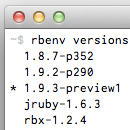
 In the past couple of months I've seen situations arise where developers aren't entirely sure how Ruby has chosen to interpret their code. Luckily, Ruby 1.9 comes with a built-in library called Ripper that can help solve the problem (there's a 1.8 version too, see later). Here, I give the 30 second rundown on what to do.
 I hang out in #nwrug on Freenode, the IRC channel of

 Ruby screencasting supremo Geoffrey Grosenbach has unveiled PeepCode's new

 Robert Klemme walks through

 One of the biggest benefits of bringing Merb developer Yehuda Katz on board to work on Rails 3.0 has been his relentless pursuit of extracting out all of Rails' magical abilities from their monolithic encasings and into separate, manageable chunks. A case in point is

 Sau Sheong Chang works at Yahoo!'s Singapore office. Yahoo! isn't implemented in Ruby, of course, but Sau's made an attempt at implementing a basic search engine in Ruby and has written
 There's plenty of stuff in Ruby that I've either not noticed before, noticed but forgotten about, or otherwise failed to realize the utility of. Add to that all the awesome Ruby tricks and techniques I'm seeing in people's code over on Github lately and.. we need a new series here: Ruby Techniques Revealed!