The Top 10 Ruby / Rails Blogs (and Why)


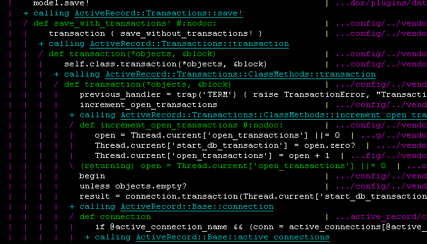
Just a couple of weeks ago, the XRuby team released XRuby 0.2.0. XRuby is Ruby-to-Java bytecode compiler, so you can compile Ruby source code directly to Java classes. The latest version fixes several issues and adds debugging support.


Matthew Bass has written a tutorial, published by InfoQ, called "Automating File Uploads with SSH and Ruby." It provides an in-depth look into building a small Ruby script that can backup files to a remote machine over SSH using the Net-SSH and Net-SFTP libraries. It goes into quite some depth, and provides source code for a recursive backup script. If you haven't had a dig into the Net-SSH and Net-SFTP libraries yet, it's worth a look to see how the basics work.
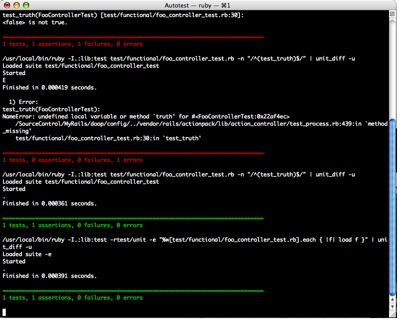

Handshake, currently in version 0.3.0, is an informal design-by-contract system written by Brian Guthrie in pure Ruby. It's intended to allow Ruby developers to apply simple, clear constraints to their methods and classes.
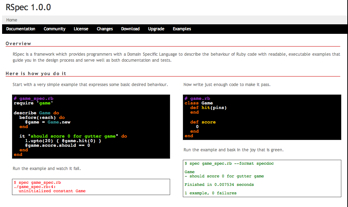

Gibberish is a Rails plugin developed by Chris Wanstrath which provides a hassle-free text translation capability for your Rails applications. The first application to use it is the Beast forum system.

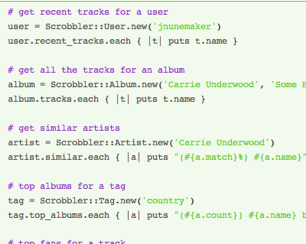
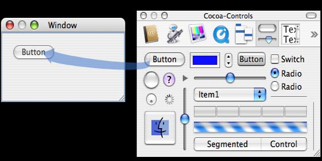
 Joyent Slingshot allows developers to deploy Rails applications that work the same online and offline (with synchronization) and with drag into and out of the application just like a standard desktop application. Check its two-minutes tutorial to get a feel of how you can make it work.
Erlectricity is a very early stage library in a "pre-release" stage that acts as an interoperability bridge between Ruby and Erlang processes. Scott Fleckenstein is the developer, and he is going to continue blogging about Erlectricity's development, and Ruby / Erlang interoperability on his blog. While this topic isn't quite mainstream yet, many Ruby developers have become interested in Erlang lately and Ruby / Erlang interoperability and co-operation is likely to become a big topic in the Ruby community towards the end of the year.


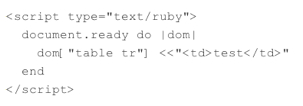

Ilya Grigorik has written a article demonstrating three different ways you can schedule tasks to run using Ruby, including a simple thread based scheduler, a OpwnWFEru based scheduler, and a BackgrounDRB based scheduler. A notable omission is RailsCron, which provides another alternative for Rails users.
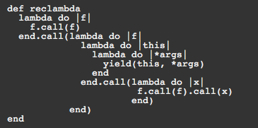

I've stumbled across several great snippets of Ruby code on the Web in the past few weeks, and rather than bore you with a post on each one, here's a whole collection at once:

Evan Weaver had a basic problem to solve: