Migrating to Ruby 1.9


Ruby 1.9 Coming To Symbian OS
MacRuby: Ruby Running On Top of Objective-C


JRuby 1.1 Release Candidate 2 Released


License: CC Attribution Credit: conner395 @ Flickr
Ruby is an easy language to learn, but it's often necessary to look up something we've forgotten. A combination of Google plus any Ruby books we have on our shelves can help, but sometimes it's handy to refer to a simpler set of notes - such as a "cheat sheet." This post attempts to cover the most interesting ones.
Fixing Ruby & Rails' slow performance with patches!
As Wikipedia says, XMPP is "an open, XML-inspired protocol for near-real-time, extensible instant messaging and presence information." It's used by Jabber, the Gizmo Project, Google Talk, Pidgin, Kopete, and all sorts of open source instant messaging applications. It can also be used by any applications you want to develop yourself to pass messages back and forth, for example.
Chad Woolley has put together a helpful blog post called "ruby-debug in 30 seconds (we don't need no stinkin' GUI!)" that covers how to use the ruby-debug command line debugger to debug Ruby applications. Also of interest will be this cheat sheet by the guys over at ErrFree.
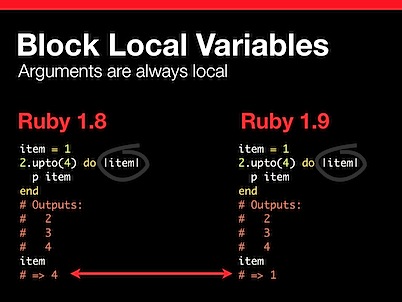
In Getting Code Ready for Ruby 1.9, James Edward Gray II is attempting to put together a comprehensive blog post on the various things you need to do to migrate your Ruby 1.8 code over to working on Ruby 1.9. So far, James only looks at a handful of potentially sticky areas, but commenters have already started chipping in with suggestions, including how to rewrite the BlankSlate class for Ruby 1.9.


I love finding a library that does exactly what it claims to do, and does it in the simplest way possible. Faker by Ben Curtis is a Ruby library, packaged as a Ruby Gem, that generates "fake data" for you, in the form of names, telephone number, e-mail addresses, addresses, and so forth.
Amazon EC2 (Elastic Compute Cloud) Control Library
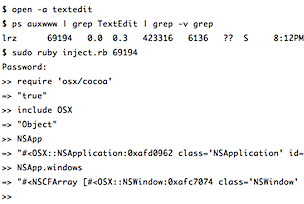
Ramaze is a simple, light weight (in a good way!), modular Web framework developed in Ruby. Like Rails, and unlike some of its newer competitors, such as Sinatra, Ramaze sticks to the MVC (Model, View, Controller) paradigm, making it more like a lighter, more modular Merb-alike. Ramaze is already a year old, and one thing that the official Ramaze Web site does right is provide lots of example code and documentation. The framework has also seen four releases in the last six months, a sure sign that someone cares about it.
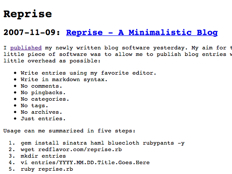
Eivind Uggedal has written in with a note about a new blog system he's built using the lightweight Sinatra framework. It's about 100 lines long including the inline templates! An example of the finished software powers Eivind's own blog. Sinatra is looking to be an absolutely excellent mini-framework for running up basic non-MVC applications, and you can learn more about it here.