Welcome to this week’s roundup of Ruby news, articles, videos, and more, cobbled together from my e-mail newsletter, Ruby Weekly. If you've been celebrating Thanksgiving this week, I hope you're having a good break.
Welcome to this week's Web-based syndication of Ruby Weekly, the Ruby e-mail newsletter (just passed 17,000 subscribers - c'mon, sign up! :-)). While I have you, be sure to follow @RubyInside on Twitter as I'm going to be posting news more frequently there than on the Web site from now on.
Ruby on Rails' creator David Heinemeier Hansson is currently at RailsConf 2011 along with hundreds of other Ruby and Rails developers. In a first for RailsConf, there's a live stream of some of the event which is was embedded below so you could watch DHH's keynote.
Guess what? Yep, the forthcoming Rails 3.1 is going to be bringing in a few new friends as dependencies: CoffeeScript, jQuery, and Sass. What does this mean? Why has this been controversial? I'm going to quickly run through the details here.
Rails 3 is great. RSpec 2 is great. And Ruby 1.9.2 is really great. Getting them all running together and quickly, however, isn't entirely straightforward. In this post I demonstrate how to get everything ticking over along with automatically running, super-snappy test runs.
Rails 3.0 has been underway for a good two years, so it’s with immense pleasure that we can declare it’s finally here. We’ve brought the work of more than 1,600 contributors together to make everything better, faster, cleaner, and more beautiful.
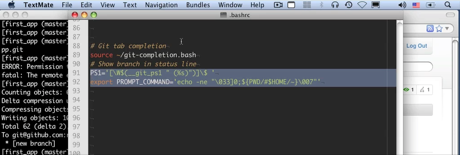
Today, Rails core member Jeremy Kemper dropped the words that lots of ardent Rails developers have been waiting for: "Rails 3 beta is LIVE." It's true! Rails 3.0's first approved beta/pre-release version is now live and ready for you to install.
Whenever something's a really "big deal" in the Ruby world, we cover it - even if it makes more sense on Rails Inside (which is now switching to a user contributions model). Given that, we've gone through all the latest and greatest Rails 3.0 related links and put together a ton of them to help you on your way with the recently released Rails 3.0 beta. Enjoy!
One of the biggest benefits of bringing Merb developer Yehuda Katz on board to work on Rails 3.0 has been his relentless pursuit of extracting out all of Rails' magical abilities from their monolithic encasings and into separate, manageable chunks. A case in point is ActiveModel, a new library that provides the model related parts of ActiveRecord but without the database requirements.
Riot is a new Ruby test framework by Justin Knowlden that focuses on faster testing. Justin was frustrated with his slow running test suites, despite employing techniques such as using factories, mocks and avoiding database access. He realized that a slow-running suite makes one reluctant to run it or expand it - not good.
If you've worked with Web apps using Ruby, you might know of Rack, an interface that sits between Ruby applications and HTTP-speaking Web servers. All of the major Ruby frameworks and server setups use it now, including Rails. Middleware (in Rack) is code that manipulates data going back and forth between your Ruby apps and the HTTP server. You can use middleware to intercept requests, change data in mid-flow, etc. Ryan Bates has a great screencast tutorial if you're new to the concept and want to build your own.
Mustache is a new templating library from Chris Wanstrath (a.k.a. defunkt of GitHub fame) that provides a way to render views in your chosen Ruby web framework. Influenced by ctemplate, Mustache helps to keep your MVC layers separate by actively preventing the inclusion of application logic in your views.
Rails Rumble is an annual Ruby (and Rails) development contest where developers attempt to build a working web app in 48 hours. This year it took place between 22-23 August and you can now vote on the top 22 applications (as ranked by an expert panel - disclaimer: I was on the panel). Despite its name, Rails Rumble is not only for Rails applications - this year, any application that uses Rack could be entered. I wasn't aware of this before the contest took off, but hopefully with this in mind many more Sinatra and Ramaze entries could join the fold next year.
Did you miss the Scotland on Rails conference this year? No need to fret though, as Engine Yard are hosting videos of all the presentations made at this popular conference. With 27 presentations covering topics from deployment to testing, there is something here for everyone.
Adam Sanderson has written an extremely useful RubyGems plugin called open_gem. It makes it really quick to inspect what's inside your gems, e.g.: gem open rails. You'll need to be running RubyGems 1.3.2 first.
What's Hot on Github is a monthly(ish) post highlighting interesting GitHub-hosted Ruby-related projects that are new or updated within the past month.
Five months ago JetBrains (the company behind Java IDE IntellJ IDEA) released a "public preview" of RubyMine, a new Ruby and Rails IDE. Now, they've released the beta of version 1.0, the precursor for a final 1.0 launch later this month. You can download it right away - it came in at about a 75MB download for OS X, but Windows and Linux versions are also available.
Twitter - the lifestreaming-meets-microblogging social site - has exploded in the last year and lots of applications have been developed that can take advantage of Twitter accounts. The downside is that many have required users to put their own Twitter username and password credentials into the third party apps.. a security minefield!


 Ruby on Rails' creator David Heinemeier Hansson is currently at
 Guess what? Yep, the forthcoming Rails 3.1 is going to be bringing in a few new friends as dependencies:
 Today, Rails core member Jeremy Kemper dropped the words that lots of ardent Rails developers have been waiting for: "Rails 3 beta is LIVE." It's true! Rails 3.0's first approved beta/pre-release version is
  Whenever something's a really "big deal" in the Ruby world, we cover it - even if it makes more sense on
  One of the biggest benefits of bringing Merb developer Yehuda Katz on board to work on Rails 3.0 has been his relentless pursuit of extracting out all of Rails' magical abilities from their monolithic encasings and into separate, manageable chunks. A case in point is
 If you've worked with Web apps using Ruby, you might know of




 What's Hot on