Eloy Duran (of the Dutch Rails consultancy Fingertips) has put together an interesting side project: a WebKit plugin written in MacRuby. His 'MacRubyWebKitPluginExample' project on GitHub is a short, self contained example of how to pull it off, so it's worth checking out if you want to do something similar. Eloy's example simply allows Ruby code to be supplied by a text box in a WebView and then executed by MacRuby on the back end.
At its "Back To Mac" presentation yesterday, Apple unveiled the Mac App Store, an equivalent of the iOS App Store for the Mac. Given the relentless development and improvement of MacRuby and the power it brings Rubyists in developing complete OS X applications, I'm convinced that the time is right for Ruby to make a big splash on the OS X GUI app development front.
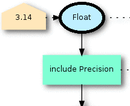
When you want to inspect your objects in Ruby, Object#inspect, p, or awesome_print are all valuable. You're stuck with plain-text, though, and primarily designed to look at object data rather than object models. If you want to drill down into parent classes, see object and class relationships, etc, then, check out DrX, a visual object inspector for Ruby!
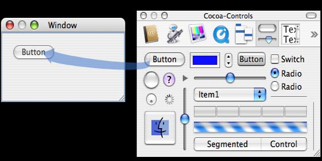
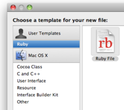
Want to develop a Mac OS X app without getting waist deep in Objective C? MacRuby is the answer, and it’s now mature enough to use directly from XCode to build fully-featured Ruby-powered Mac apps. “Jean Pierre Hernandez” of Phusion presents a walkthrough of how to do it, step by step.
MacRuby has hit a significant milestone in its development today: version 0.5! The key features include improved HotCocoa support (though this is now maintained separately from core on GitHub), better Ahead-Of-Time (AOT) compilation, and support for OS X 10.6's Grand Central Dispatch.
MagLev is a new(ish) Ruby implementation built by Gemstone Systems that focuses on providing an integrated object persistence layer and a distributed shared cache - a truly scalable Ruby implementation. Maglev has, however, had an air of vaporware about it, having been hyped up in early 2008 and only available to a small group of alpha testers till now. That changes today with the first public, alpha release!
MacRuby, a port of Ruby 1.9 to the Mac OS X Objective C common runtime, is today one step closer to a production-ready Ruby implementation with the release of beta 2 of MacRuby 0.5. MacRuby 0.5 has been highly anticipated since it was first mentioned back in March because it promises significant performance improvements, a new LLVM based virtual machine (replacing YARV), and significant compatibility improvements and bug fixes. Even still at this beta stage, 0.5 delivers on these promises.
RubyMine is a Ruby and Rails IDE (for Windows, OS X, and Linux) by JetBrains, the guys behind the popular Java IDE IntelliJ IDEA. We've previously posted about how much people seem to like RubyMine, and it looks like things will get even better, as they've just released the beta of RubyMine 2.0. Notably, RubyMine 2.0 will be free to existing 1.0 users as it falls within the year allowed for free updates!
Blogo is a Mac / OS X blogging client developed by Brainjuice - the business name of Benjamin Jackson and Ivan Neto, Rio based Ruby developers and Web designers - and born out of their frustration with existing commercial blog editors.
Priit Haamer is an Estonia-based Ruby developer who has put together a "Ruby dictionary for Mac OS X." All you have to do is download the file he provides, unzip it into your ~/Library/Dictionaries folder (or create that folder and unzip it in there) and you'll be able to use the built-in OS X "Dictionary" application to search for Ruby module names, classes, and methods.
MacRuby - a Mac OS X port of Ruby 1.9 designed to run directly on top of OS X's frameworks - recently hit a new milestone with the release of MacRuby 0.3.
While it was pretty momentous last year when Mac OS X (Leopard) was released with full support for Ruby and Rails included with the OS, it seems that the Ruby train is still rolling with Apple.

 Eloy Duran (of the Dutch Rails consultancy Fingertips) has put together an interesting side project: a WebKit plugin written in MacRuby. His 'MacRubyWebKitPluginExample' project on GitHub is a short, self contained example of how to pull it off, so it's worth checking out if you want to do something similar. Eloy's example simply allows Ruby code to be supplied by a text box in a WebView and then executed by MacRuby on the back end.
 MacRuby team lead and Apple employee Laurent Sansonetti has
  At its "Back To Mac" presentation yesterday, Apple unveiled the
  When you want to inspect your objects in Ruby,
  Want to develop a Mac OS X app without getting waist deep in Objective C?



 Priit Haamer is an Estonia-based Ruby developer who has put together a "
 Over a year ago we had a post about