Twitter - the lifestreaming-meets-microblogging social site - has exploded in the last year and lots of applications have been developed that can take advantage of Twitter accounts. The downside is that many have required users to put their own Twitter username and password credentials into the third party apps.. a security minefield!
Sau Sheong Chang works at Yahoo!'s Singapore office. Yahoo! isn't implemented in Ruby, of course, but Sau's made an attempt at implementing a basic search engine in Ruby and has written a pretty interesting, indepth article about the whole process. Sau's search engine is formed of a crawler, indexer, and query system, and uses Hpricot, DataMapper, and Sinatra to get things done. Lots of code, lots of explanations - go read it.
Can you remember what a hideous chore it was to deploy Ruby-based apps (Rails apps being a key example) before early 2008? FastCGI, proxying schemes, plain old CGI - it was all a bit of a mess. It was so bad, in fact, that in January 2008 we posted No True "mod_ruby" Is Damaging Ruby's Viability On The Web and kicked off a major discussion about it (115 comments!)
If you read a lot of Ruby blogs, you might see people talking about testing (or its behavior driven equivalent) as if it's the holy grail, yet most Ruby books and online tutorials fail to cover it in much detail at all. Last year, Jamie Van Dyke wrote an article for The Rubyist called Building A Gem Using BDD to put things right (the article was licensed exclusively to the magazine until recently).
Bom dia to all of Ruby Inside's Brazilian (and Portuguese) readers! You can now, if you prefer, read (and subscribe to) the Portuguese language edition of Ruby Inside at http://www.rubyinside.com.br/(if you'd rather just subscribe to the feed, it'shere, or check it out on Twitter@rubyinside_br)
It's approaching two weeks now since Ruby 1.9.1 was released, bringing with it not only a whole stack of extra performance and a new VM, but also a lot of compatibility issues. No pain, no gain!
What's Hot on Github is a monthly post highlighting interesting projects that are new or updated this month, within the Ruby community that are hosted on Github. Github has become an extremely popular place for Ruby and Rails developers to congregate over the last year, so I wanted to list some of the new projects, and some of the updated ones that I have found interesting.
So here we are right in the down period between Christmas and the start of the New Year. Few big releases or new developments come out at this time of the year, so it's a good time to either enjoy time offline or.. to get reading some insightful articles we wouldn't normally have time for! Luckily a few Rubyists have been busy spending the end of December putting together some rather good articles.. so get reading:
Whenever you run a Ruby program, Ruby's parser processes the code and turns it into an "abstract syntax tree" (an AST) which can then be either turned into bytecode for YARV (on Ruby 1.9) or be interpreted immediately (as with Ruby 1.8).
Everyone's favorite Australian Ruby developer, Dr. Nic Williams, has put together a handy slide presentation called How to Package Your Ruby Code where he demonstrates how he packages his various bits of Ruby code using RubyGems. His process is backed by his own NewGem, a library that generates a framework for a new Ruby gem, and Hoe by Ryan Davis.
What's Hot on Github is a monthly post highlighting interesting projects that are new or updated this month, within the Ruby community that are hosted on Github. Github has become an extremely popular place for Ruby and Rails developers to congregate lately, so I wanted to list some of the new projects, and some of the updated ones, that I have found interesting and that are too small for their own blog post.
At RubyConf 2008, other than giving his own Scaling Ruby talk, Gregg Pollack of EnvyCasts was hard at work getting summaries of all of the presentations from the speakers. In RubyConf 2008 in 90 Seconds you get a fast-fire summary of the summaries. In RubyConf in 31 Minutes you get a more complete record - good viewing for anyone who didn't attend the conference as it gives you a good idea of what's on the Ruby community's mind.
If you've ever investigated how to build your own compiler, you might be familiar with LLVM (Low Level Virtual Machine), a "compiler infrastructure" that makes it easy(ish) to create virtual machines, code generators, and optimizers of your own. It also has its own intermediate representation language that's architecture independent and the instruction sets and typing system available are similarly language independent. In theory, if you want to build your own programming language and a compiler for it, LLVM will get you most of the way.
HappyMapper is John Nunemaker's attempt at "making XML fun again" for Rubyists by providing an object to XML mapping library with a succinct syntax. Essentially, you can use HappyMapper to rapidly turn XML into Ruby objects - even nesting them inside and referring to each other. This is powerful stuff. To install, just gem install happymapper
Merb - a much heralded, highly flexible Ruby-based Web application framework - has reached version 1.0 after two years of development. Congratulations to Merb's creator, Ezra Zygmuntowicz, and to the large group of associated developers (such as Yehuda Katz and Matt Aimonetti) who've kept adding features and pushed Merb forward to be a significant alternative to Rails.
What's Hot on Github is a monthly post highlighting interesting projects that are new or updated this month, within the Ruby community that are hosted on Github. Github has become an extremely popular place for Ruby and Rails developers to congregate lately, so I wanted to list some of the new projects, and some of the updated ones, that I have found interesting and that are too small for their own blog post.
Following on from the highly successful MerbCamp, the Merb Framework took another big step this week with the announcement of the availability of release candidate 2 for it's upcoming 1.0 release (due within weeks now). No major changes and The Merbist blog lists mainly a focus on bug fixes and Windows compatibility:
Giles Bowkett is anything but a quiet chap - indeed, he's one of the more outspoken members of our community. With the roar, however, comes a lot of wisdom, and Giles recent work on integrating Ruby and MIDI is inspired.
Remember RubyFringe, the avant-garde Ruby conference held in Canada this September? According to most reports, it went down as possible the best Ruby conference ever and spawned some very interesting presentations - that those of us who didn't go wouldn't have seen..
Rubyology is a Ruby-based podcast chaired by Chris Matthieu. Its focus is on interviewing interesting Ruby (and Rails) developers - finding out about their projects, what makes them tick, and extracting their insights into the Ruby and Rails worlds.
You might have missed the announcement, but a couple of months ago I launched Rails Inside in order to allow Ruby Inside to focus more on Ruby-specific news. Due to the obvious crossover between the audiences, I promised that I'd start a regular series of Ruby Inside posts highlighting some of the most interesting Rails news from Rails Inside - just in case you're into Rails but not so into it that you want to subscribe to Rails Inside! This is the first post of that series.
It has not gone unnoticed that random announcements of individual events do not work well here on Ruby Inside. With events taking more of a local focus these days, it makes more sense to pool the announcements together. This post, therefore, is a rather uncelebrated launch of a new series of event-related compilation posts. Please make sure to post in comments if you have other events you want to mention or visit our Contact page.

 Twitter - the lifestreaming-meets-microblogging social site - has exploded in the last year and lots of applications have been developed that can take advantage of Twitter accounts. The downside is that many have required users to put their own Twitter username and password credentials into the third party apps.. a security minefield!
 Sau Sheong Chang works at Yahoo!'s Singapore office. Yahoo! isn't implemented in Ruby, of course, but Sau's made an attempt at implementing a basic search engine in Ruby and has written
 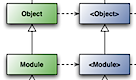 Vidar Hokstad is the writer behind the fine
  Can you remember what a hideous chore it was to deploy Ruby-based apps (Rails apps being a key example) before early 2008? FastCGI, proxying schemes, plain old CGI - it was all a bit of a mess. It was so bad, in fact, that in January 2008 we posted
  If you read a lot of Ruby blogs, you might see people talking about testing (or its behavior driven equivalent) as if it's the holy grail, yet most Ruby books and online tutorials fail to cover it in much detail at all. Last year, Jamie Van Dyke wrote an article for
 It's approaching two weeks now since
  What's Hot on
  So here we are right in the down period between Christmas and the start of the New Year. Few big releases or new developments come out at this time of the year, so it's a good time to either enjoy time offline or.. to get reading some insightful articles we wouldn't normally have time for! Luckily a few Rubyists have been busy spending the end of December putting together some rather good articles.. so get reading:
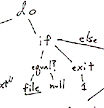 Whenever you run a Ruby program, Ruby's parser processes the code and turns it into an "
 Everyone's favorite Australian Ruby developer, Dr. Nic Williams, has put together
  If you read Ruby Inside in 2006, you might remember
  At
At  If you've ever investigated how to build your own compiler, you might be familiar with

 Following on from the highly successful MerbCamp, the
  Over a year ago we had a post about

 Remember