MacRuby 0.3 Released (Now With Interface Builder Support)
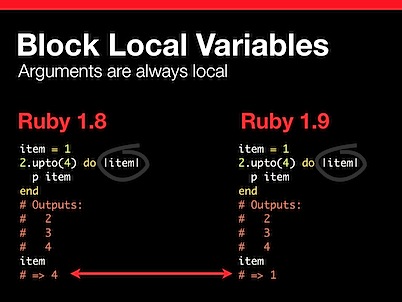
 MacRuby - a Mac OS X port of Ruby 1.9 designed to run directly on top of OS X's frameworks - recently hit a new milestone with the release of MacRuby 0.3.

MacRuby - a Mac OS X port of Ruby 1.9 designed to run directly on top of OS X's frameworks - recently hit a new milestone with the release of MacRuby 0.3.

 What's Hot on Github is a monthly post highlighting new and/or interesting projects within the Ruby community that are hosted on Github. Github has become an extremely popular place for Ruby and Rails developers to congregate lately, so I wanted to list some of the new projects, and some of the updated ones, that I have found interesting and that are too small for their own blog post.

 This week you may have heard about "Chrome," a new Web browser being developed by Google (if you haven't, read this online comic book that demonstrates its worthiness). Associated with Chrome is V8, a new open source JavaScript engine that's designed to execute JavaScript code at never-seen-before speeds.
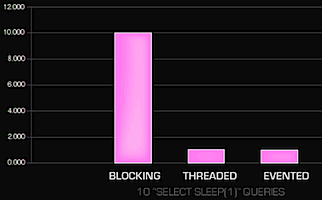
After tackling the difficult task of improving Rails deployment, Phusion - the creators of Passenger (mod_rails) recently announced the availability of daemon_controller - a library (rather than a stand-alone tool) for managing daemons. It lets you write applications that manage daemons in a robust manner (e.g. mongrel_cluster or UltraSphinx could be adapted to use this library).
 Recently, Yahoo! launched BOSS - the "Build Your Own Search Service." In all but name, it appears very similar to their older Yahoo! Search API, as it allows you to query Yahoo's search index programatically. Under the surface though, Yahoo has removed the 5,000 query per day limit, you're unrestricted in how you present the data returned, you can re-order the data, and no attribution is required.
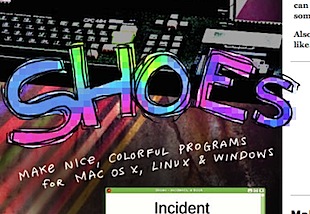

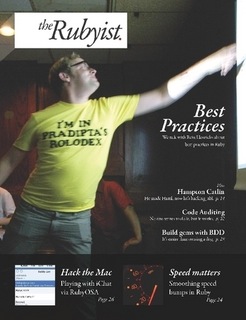



(Photo credit: Kieran Huggins)



Writing for Ruby Inside, I get to see a lot of Ruby code. Most is good, but sometimes we forget some of Ruby's shortcuts and tricks and reinvent the wheel instead. In this post I present 21 different Ruby "tricks," from those that most experienced developers use every day to the more obscure. Whatever your level, a refresh may help you the next time you encounter certain coding scenarios.