Ruby Inline is an analog to Perl's Inline::C. Out of the box, it allows you to embed C/++ external module code in your ruby script directly. By writing simple builder classes, you can teach how to cope with new languages (fortran, perl, whatever).
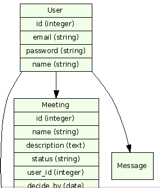
There's been talk about producing something like this in the Rails community, and it seems someone has finally done it.. a Rails Application Visualizer. Simply run a rake task and it produces a graphic showing your models and how they relate to one another. It requires the GraphViz library to run, and is only in its early days. Looks promising though!
This cool Ruby cheat sheet quickly runs you through.. reserved words, syntax rules, escape characters, regular expression characters and formats, file mode strings, special variables, expressions, operations, built in classes, and more. Extremely useful to beginners and advanced Rubyists alike.
A few days ago I learned about Curvy Corners, an incredible JavaScript that lets you put rounded corners on your DIV elements that can do anti-aliasing and handle any size border. It's the best rounded corner script so far.
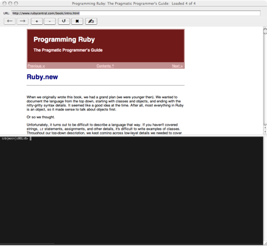
Rodney Ramdas has put together a small application called "Learn Ruby" that shows the freely available version of the Pickaxe Ruby book alongside an instance of irb, meaning you can work through the examples and tutorials more freely. Note that it's for OS X only.
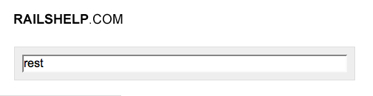
RailsHelp.com has possibly the simplest homepage in the world. Just type in what you're searching for, and off you go. It's a nice change to digging through the regular API documents.
Another new article in Bruce's series shows you how to get DOM-friendly IDs from ActiveRecord. This is a solution nearly all Rails developers have implemented at some time or another:
Bruce Williams has a great set of articles going on on his blog called "Rails Views". Each one looks at a different aspect of Rails' views and templates system and how you can use it in a cool or different way. You are bound to learn something or come up with some ideas on how to make your views more efficient (I sure have!). Here are some of the recent posts in the series:
Kevin Clark looked at his options for testing his RJS (Javascript templates for Rails) templates but wasn't happy with the limited options, so he rolled his own testing system as a Rails plugin. It's called ARTS (Another RJS Testing System) and is available here. It's pretty neat, and if your app uses a lot of RJS templates, you're going to want it. Here's an example of a test using ARTS:
People who are considering Rails as a platform often ask what it's integration with tools like HTTP authentication are like, often because that's the way they're currently solving certain problems. Up till now HTTP authentication has been something you've had to implement yourself, but now there's a plugin. Install it like so:
For the fun of it, I developed a quick Ruby obfuscation tool a few weeks ago. It's not a proper obfuscater that changes variable names and such, but it'll keep your code from being immediately understood. Here's the library, px.rb:
An anonymous commenter contributed a cute Ruby example on this post talking about Java's verbosity. The original poster lamented on how much code you have to write to create some basic accessors on a Java class.
While looking at NegaPosi, a crazy Ruby implementation of a micro language that only uses unary operators, I discovered a cute way to initialize instance variables. Usually you'd do this: