Raptor: A Forthcoming Ruby Web Server for Faster App Deployment


Ruby isn't known for its game development chops despite having a handful of interesting libraries suited to it. Java, on the other hand, has a thriving and popular game development scene flooded with powerful libraries, tutorials and forums. Can we drag some of Java's thunder kicking and screaming over to the world of Ruby? Yep! - thanks to JRuby. Let's run through the steps to build a simple 'bat and ball' game now.
 Amazon has unveiled an official Ruby SDK for AWS! Amazon.com's Amazon Web Services has been a rip-roaring success since its first publicly-available service, S3 (Simple Storage Storage), was released in 2006. It has since expanded to about 20 services in all, the most popular being S3 and the "elastic compute cloud" EC2.
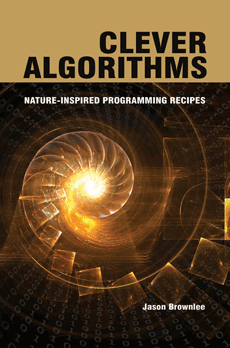 Clever Algorithms is a newly released book by Jason Brownlee PhD that describes 45 algorithms from the Artificial Intelligence (AI) field with Ruby-based examples. It's well produced and, notably, free in its PDF and online formats. A print copy is available at a small cost.
 Eloy Duran (of the Dutch Rails consultancy Fingertips) has put together an interesting side project: a WebKit plugin written in MacRuby. His 'MacRubyWebKitPluginExample' project on GitHub is a short, self contained example of how to pull it off, so it's worth checking out if you want to do something similar. Eloy's example simply allows Ruby code to be supplied by a text box in a WebView and then executed by MacRuby on the back end.
 Parslet is a new "simple parser framework" for Ruby built by Kaspar Schiess. It follows the PEG (parsing expression grammar) style of parsing and its primary goals are to be simple, testable, and to have extensive and powerful error reporting features (something that Kaspar states Treetop sorely lacks).
 VCR is a library by Myron Marston that records your test suite's HTTP interactions so that they can be quickly replayed during future test runs. The big win is that you get predictable, quick and accurate tests. If you need to update the data, just delete the fixtures VCR generates and you're good to go.
 Ever used Dropbox? It's awesome. A cross-platform (Windows, Mac, Linux, and even mobile) file syncing and backup service with 2GB for free (or 2.25GB if you sign up with this link). Well, if you'd like to roll out your own system on your own infrastructure, send some thanks to Ryan LeFevre, the creator of RubyDrop, an open source Dropbox clone based on Ruby and git.
 Rubinius or GitHub repo, an alternative Ruby implementation that's built in Ruby itself - as much as possible, has this last weekend hit the coding equivalent of a Bar Mitzvah.. its 1.0 release! Congratulations to the Rubinius team, past and present, and everyone who has helped with its release - I didn't know if you were going to make it for a moment there..
 In the UK there's a cliché that goes: "You wait hours for a bus, and then three come along at once!" So it went with these three Ruby date and time libraries. They all made an appearance on RubyFlow last week and are all useful in their own ways, depending on how you're working with dates and times.
 Nestful is a simple HTTP/REST client library for Ruby, developed by Alex MacCaw (of Juggernaut) fame. Nestful allows you to consume basic Web services easily, usually in a single line of code. It can deal with JSON, buffered downloads, and callbacks out of the box.
 Cinch (or GitHub repo) is a new Ruby "microframework" for creating IRC bots. Effectively, Cinch is a library that both abstracts away all of the complexities of dealing with IRC servers and presents a DSL for rolling out your own functionality.
 awesome_print is a Ruby tool that provides "pretty printing" support for your objects. It's a bit like
 p, pp or, if you prefer, puts obj.inspect, but with significantly improved, contextual, colored output. Its creator and maintainer is Michael Dvorkin of Fat Free CRM fame.
 Hot on the heels of Sinatra 1.0 comes the official release of Padrino (or GitHub repo), a webapp framework that provides an extra layer of functionality on top of Sinatra (like helpers, generators, admin interface, and internationalization). Padrino is Sinatra 1.0 compatible.
 Supermodel is a new library by Alex Maccaw that uses the Rails 3.0 ActiveModel library to provide ActiveRecord-esque in-memory "database" storage in Ruby.
 In November 2007, we casually mentioned a new Ruby webapp library called Sinatra. It took a year to capture the imagination of the Ruby community as a whole and we eventually covered it in more depth but today we're proud to (exclusively) announce that Sinatra has today reached its landmark 1.0 release!
 EventMachine is a simple(ish), fast, event-driven I/O library for Ruby. Its goal is to provide highly scalable I/O performance with an easy-to-use API wrapped around the nastiest parts of the process (since typical Ruby coding practices aren't particularly event-driven friendly). Aman Gupta has put together an awesome 114-page deck of slides
 (also available as a PDF) that walks through EventMachine with lots of practical code examples.
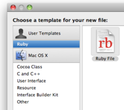 Want to develop a Mac OS X app without getting waist deep in Objective C? MacRuby is the answer, and it’s now mature enough to use directly from XCode to build fully-featured Ruby-powered Mac apps. “Jean Pierre Hernandez” of Phusion presents a walkthrough of how to do it, step by step.
 Vagrant is a Ruby-based tool for building and deploying virtualized development environments. It uses Oracle's open-source VirtualBox virtualization system along with the Chef configuration management engine along with lots of Ruby goodness to automate the creation and provisioning of virtual machines for development purposes.
 Ruby Best Practices is a book by Gregory Brown (and published by O'Reilly) that looks into the "Ruby way" of doing things in the Ruby language and, specifically, why Rubyists tend to write Ruby the way they do. It's an engaging book and we took a look at it and interviewed Gregory Brown about it just over a year ago.
 Harmony, from Martin Aumont, is a new Ruby DSL for executing JavaScript and DOM-using code from within Ruby apps. Why's that cool? Well, it enables you to build your own Ruby-level unit tests for JavaScript code within your Web applications - everything can be under one set of test suites!
 Toto (GitHub repo) is a new lightweight Ruby and Rack-based blogging engine designed specifically for "hackers" by Alexis Sellier. Content is managed entirely through Git - so everything is version controlled - and articles are stored as text files with embedded YAML metadata. At only 300 lines, it's easy to hack to your own taste, too.
 One of the biggest benefits of bringing Merb developer Yehuda Katz on board to work on Rails 3.0 has been his relentless pursuit of extracting out all of Rails' magical abilities from their monolithic encasings and into separate, manageable chunks. A case in point is ActiveModel, a new library that provides the model related parts of ActiveRecord but without the database requirements.
 Cramp (GitHub repo)is a new, asychronous evented Web app framework by Pratik Naik of 37signals (and the Rails core team). It's built around Ruby's EventMachine library and was designed to use event-driven I/O throughout - making it ideal for situations where you need to handle a large number of open connections (such as Comet systems or streaming APIs.)
 CoffeeScript (GitHub repo) is a new programming language with a pure Ruby compiler. Creator Jeremy Ashkenas calls it "JavaScript's less ostentatious kid brother" - mostly because it compiles into JavaScript and shares most of the same constructs, but with a different, tighter syntax.
 Friendly is a new Ruby ORM (a la ActiveRecord) that lets you easily use NoSQL ideas on regular database engines, such as MySQL. Developer James Golick has written a blog post introducing Friendly that goes into detail on how it works - with code examples. Effectively you get schema-less, document-like storage (with indexes!) but based around MySQL.
 Phusion Passenger and Ruby Enterprise Edition developers Ninh "Hernandez" Bui and Hongli Lai travelled to San Francisco last week and gave a 35 minute Google Tech Talk called Building A More Efficient Ruby Interpreter.